Lacto-n-biose (LNB) is a naturally occurring oligosaccharide found in human milk, known for its outstanding biological activity. LNB, as a versatile prebiotic, finds a wide range of applications, from improving gut health to enhancing immune system function, and is extensively used in functional foods, infant formula, and specialized medical foods.
Seebio Biotech offers food-grade Lacto-n-biose. Please contact us at: service@seebio.cn or Phone: +86 21 58183719
Product Basic Information
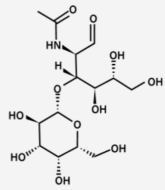
Lacto-n-biose
|
Molecular Formula
|
C14H25NO11
|
|
Molecular Weight
|
383.35
|
|
Appearance
|
Powder
|
Applications:
Suitable for functional foods, infant formula foods, specialized medical foods, nutritional supplements, beverages, pharmaceuticals, and research reagents.
In the Food Industry:
Promotion of Bifidobacterium Prebiotic Effects: Research has confirmed the prebiotic effects of Lacto-n-biose (LNB) on Bifidobacterium. LNB serves as a building unit of type 1 human milk oligosaccharides and can promote the growth of various Bifidobacterium strains, especially in the infant gut, including Bifidobacterium bifidum, Bifidobacterium breve, and Bifidobacterium longum. This suggests that LNB may be a natural prebiotic in human colostrum. Studies have also explored the utilization of LNB by Bifidobacterium, indicating that certain Bifidobacterium subspecies and related bacteria can utilize LNB for growth, supporting the importance of Bifidobacterium in the infant gut and its potential use of LNB.
Prevention of Infant Diseases: Prebiotics provide an alternative approach to prevent infant diseases. Typically, they appear in the form of oligosaccharides, which may occur naturally or be added as dietary supplements to food, beverages, or formulas. Lacto-N-biose I (LNB) is an understudied prebiotic with potential as a Bifidobacterium-active factor. It naturally exists as a component of human milk oligosaccharides (HMOs), a primary constituent of breast milk. HMOs also exhibit prebiotic activity in the body and play a crucial role in infant health and nutrition. LNB has potential applications in food ingredients, particularly in terms of its prebiotic effects, and can be used in infant formula.
In the Pharmaceutical Industry:
Regulation of Immune Cell Responses: Experiments have shown that Lacto-n-biose (LNB) has a significant impact on the antigen-specific response of immune cells, particularly in the inhibition of IL-4 secretion. Furthermore, LNB may possess prebiotic potential, which can be added to foods to promote its biosynthesis, contributing positively to infant health. The mode of action of LNB is independent of Th1-type immune development and mainly achieved by altering antigen-presenting cells to inhibit antigen-specific IL-4. This emphasizes the multifaceted potential of LNB in the fields of immunity and prebiotics.
Regulation of Virus Affinity: Rotavirus is a major pathogen causing acute gastroenteritis in children, with the P[8] genotype accounting for over 80% of human infections. Recent research has elucidated the binding mechanism of the P[8] VP8* domain to host cell receptors, specifically secretor type H antigen-1 (H1) and its precursor Lacto-n-biose (LNB). LNB, as a crucial sugar molecule, plays a key role in P[8] rotavirus infection by affecting the affinity of P[8] VP8* for H1 antigen and exhibiting differential effects between secretor and non-secretor individuals. This provides profound insights into rotavirus infectivity and highlights its potential application in antiviral therapy.
In the Research Field:
Involvement in Bifidobacterium Growth: The GNB/LNB (Lacto-n-biose) pathway plays a crucial role in Bifidobacterium growth on human milk or epithelial cell mucins. This pathway is related to lactose metabolism, where Bifidobacterium needs to convert galactose-1-phosphate (gal1P) into a usable substance through complex enzyme reactions to effectively utilize lactose. In this process, LNB plays an essential role. Research has revealed the functions of three uridine diphosphate-sugar transferases (GalT1, GalT2, and UgpA) associated with LNB and their varying significance in Bifidobacterium growth and metabolism. The results indicate that GalT1 plays a dominant role in the LNB pathway, while GalT2 comes into play in specific situations, particularly those involving specific substrates. These findings emphasize the critical role of the LNB pathway in Bifidobacterium growth, especially in environments related to lactose and human milk oligosaccharides.
Involvement in Bifidobacterium Gut Colonization: Research has identified the functions of enzymes encoded by the lnpB, lnpC, and lnpD genes downstream of the lacto-N-phosphorylase gene (lnpA). Among these, the lnpB gene encodes N-acetylhexosamine 1-kinase, responsible for producing N-acetylhexosamine I-phosphate; the lnpC gene encodes UDP-glucose hexokinase, which also exhibits activity on N-acetylhexosamine I-phosphate; the lnpD gene encodes UDP-glucose 4-epimerase, capable of acting on UDP-galactose and UDP-N-acetylgalactosamine. These discoveries reveal that the lnpABCD gene cluster encodes the GNB/LNB (Lacto-n-biose) metabolic pathway, which plays a key role in Bifidobacterium gut colonization by utilizing LNB extracted from human milk oligosaccharides.
As a Component of Biosensors: Induced lactose-binding proteins are considered potential biomarkers and therapeutic targets. They exhibit broad affinity for Lacto-n-biose, which has led to a lack of necessary selectivity and affinity in (nano)biosensors based on Lacto-n-biose. A range of fluorinated Lacto-n-biose ligands was obtained using a chemical enzyme approach that harnessed BiGalK and BiGalHexNAcP enzymes found in infant Bifidobacterium, which have been shown to tolerate fluorinated Lacto-n-biose. Research findings suggest that non-natural fluorinated Lacto-n-biose ligands can be integrated into nanomaterials, offering potential applications in the field of biosensing.
LNB Conformation in Protein Complexes: Research explores the conformation of Lacto-n-biose, a disaccharide, in protein complexes. LNB plays significant biological roles in animals, particularly in pathogen infections and intestinal microbial symbiosis. The study reveals different binding modes of LNB in various proteins, contributing to a better understanding of their biological functions.
Seebio Biotech offers food-grade Lacto-n-biose. Please contact us at: service@seebio.cn or Phone: +86 21 58183719
|
Product
|
Cas Number
|
Chemical Formula
|
Purity
|
|
Lacto-n-biose
|
50787-09-2
|
C14H25NO11
|
> 98%
|
Reference:
[1]. Warsono El Kiyat,et al. Potential of lacto-N-biose I as a prebiotic for infant health: A review. DOI:10.21924/cst.6.1.2021.277
[2]. M. Kiyohara,et al. Prebiotic Effect of Lacto-N-biose I on Bifidobacterial Growth. DOI:10.1271/bbb.80697
[3]. T. Satoh,et al. In vitro comparative evaluation of the impact of lacto-N-biose I, a major building block of human milk oligosaccharides, on the fecal microbiota of infants.. DOI:10.1016/j.anaerobe.2012.12.007
[4]. M. Goto,et al. Effect of Lacto-N-biose I on the Antigen-specific Immune Responses of Splenocytes. DOI:10.12938/bmfh.31.47
[5]. R. Gozalbo-Rovira,et al. Unraveling the role of the secretor antigen in human rotavirus attachment to histo-blood group antigens. DOI:10.1371/journal.ppat.1007865
[6]. S. Fushinobu,et al. Conformations of the type-1 lacto-N-biose I unit in protein complex structures.. DOI:10.1107/S2053230X18006568
[7]. Sarah-Jane Richards,et al. Introducing affinity and selectivity into galectin-targeting nanoparticles with fluorinated glycan ligands. DOI:10.1039/d0sc05360k
Related Products
